Published on Kurd Media 29/12/09 http://www.kurdmedia.com/article.aspx?id=16146
The Kurdish diaspora in London is not homogenous. Differences in dialect, culture and political persuasion all contribute to a community that is often recognised as divided. Despite this, Turkey’s banning of the pro-Kurdish Democratic Society Party (DTP) has provoked a strong uniform reaction from within London’s Kurdish community.
A relatively new party founded in 2005 the DTP holds 21 seats out of a total 550 in parliament, making it the first pro-Kurdish party with elected members of parliament since 1991. On the 11th December 2009 a unanimous ruling by the Turkish constitutional court demanded the closure of the DTP due to its links with the Kurdistan Worker’s Party, more commonly known simply as the PKK. These were alleged to make the party the ‘focal point of activities against the indivisible unity of the state, the country and the nation.’ In addition to the party ban, the DTP leaders Ahmet Turk and Aysel Tugluk were stripped of diplomatic immunity and banned from politics for 5 years.
Protests and demonstrations have taken place across the Kurdish regions and the diaspora since the ban of the DTP was announced. These have included major demonstrations in Turkey that have seen violent clashes between protestors and state police. Although protests in London have remained peaceful their message is no less clear than that of their counterparts in Turkey.
On the 15th December the Kurdish Federation in the UK organised a demonstration outside the Foreign Office in London protesting the ban and calling for equality for Kurds in Turkey. Attended by over 200 people the event brought together representatives from a wide variety of Kurdish organisations in London and expressed the sense of solidarity felt by many towards the 10million Kurds in Turkey.
The chair of the Kurdish Federation in the UK Arzu Peshman stresses that the event was organised ‘in order to raise awareness of the injustices committed against Kurds by the government of Turkey. The closure of the DTP has removed the only political voice of the Kurds and has left them without a voice.’ She adds that ‘Not only does this affect the Kurds but it is a move sharply in contrast with the democratisation of Turkey.’
In a statement given to the Foreign Secretary, David Milliband, the Kurdish Federation refers to the ruling of the Contemporary Lawyers Association of the closure as a ‘massacre of justice’ and calls on the British government to condemn the closure of the DTP by the Constitutional Court, and to pressure the Prime Minister of Turkey to ‘solve the Kurdish issue by democratic and peaceful methods.’
Other key Kurdish organisations in London have expressed similar sentiments. ‘Closing elected political parties down in Turkey is a clear example that the rights to freedom of association, free expression, and to free and fair elections are not safe in Turkey’ said Kerim Yuldiz, Chief Executive of The Kurdish Human Rights Project. He also drew attention to Turkey’s EU accession bid, arguing that this decision is a blow to the reform agenda of the government and displays the severe failings of the Turkish legal and political system.
On the eve of the announcement of the ban Medeni Kirci, a member of the DTP Foreign Affairs Committee, addressed a predominantly Kurdish audience at a seminar organised by the Kurdish Studies and Student Organisation (KSSO) held at the School of Oriental and African Studies (SOAS) in London. The DTP member shared instances of human rights abuses in Turkey and the importance of retaining a Kurdish voice within the political process in order to seek justice peacefully through change in legislation rather than through fear and violence. His message was particularly poignant given the sentencing of Leyla Zanar, a prominent Kurdish politician in Turkey, to one year and three months imprisonment following a speech given at a KSSO seminar in London in May 2008.
In all these instances the message is clear. The Kurdish community in London may be geographically distanced from the events unfolding in Turkey, but their voice will be raised nonetheless. Given the political isolation of Kurds in Turkey and the impact this may have on a militarization of Kurdish efforts to achieve equality, the voice of the diaspora is becoming increasingly important in the hope for a peaceful solution to the Kurdish issue in the region.
Mary Pole is a writer based in London, whose research interests include forced migration, the Middle East and Central Asia. She holds a Master of Science degree from the University of Oxford in Forced Migration.
Tuesday, December 29, 2009

Thursday, November 26, 2009
Does Downfall Equal Liberation?
PUBLISHED ON KURDISHMEDIA.COM 26/11/09
http://www.kurdmedia.com/article.aspx?id=16106
The latest film by Hiner Saleem, ‘After the Downfall’ was shown as part of the 6th Kurdish Film Festival held in London this week. Featuring Nazmi Kirik as a Kurdish exile in Germany the film captures the lives of a group of Kurdish friends and family celebrating the downfall of Saddam Hussein. The atmosphere of liberation and joyous delirium is soon overshadowed by a revelation that divides the group of friends and family members and is interspersed with a gradual building of tension between the conflicting political sides in Iraq represented at the gathering.
Cleverly intertwined throughout are the lives of Kurds currently in Iraq as well as the legacy of the Kurdish nation; this is achieved by continuous documentary and news footage of the fall of the regime in Iraq projected onto a wall. This adds a second dimension to the film in which the viewer cannot separate the Kurds in the diaspora from those in the homeland; their celebration and pain through remembrance is shared. As well as blending geographical locations Saleem also succeeds in linking together time periods with projections of the violence Saddam Hussein’s Anfal campaign contrasted with the increasing violence of the evening in Germany.
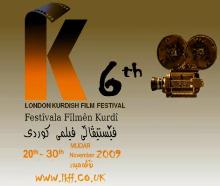 The film was met with mixed reviews during the Film Festival. Kurdish viewers questioned the necessity of a sex scene early on in the film as well as the alcohol-fuelled sense of chaos; indicative of the current trend amongst Kurdish filmmakers from the US and Europe to portray Kurds as liberal and secular.
It is in the presentation of the simplistic formula that US-led intervention and the downfall of Saddam led to Kurdish freedom that the film should be held up to scrutiny. If viewing ‘After the Downfall’ with little background knowledge about the Kurdish situation one would be forgiven for believing that the only enemy of the Kurdish people was Saddam Hussein and that everyone can now live happily ever after in a liberated Kurdistan.
In fact, as many Kurdish viewers were keen to point out, the Kurds of the modern day states of Iraq, Iran. Syria and Turkey have faced a long struggle for recognition, statehood and freedom. In presenting the Kurds here merely as recipients of US-led action to secure their freedom rather than showing the sacrificial and determined efforts Kurds have taken against their oppressors the film fulfils Western misconceptions about the Kurdish region and the events of 2003.
The decision by the London Kurdish Film Festival Organising Committee to show ‘After the Downfall’ following the short film ‘Cheese- Hope Dies Last’ was a poignant reminder of the ease at which the onlooker can view footage of war and destruction and neatly forget those caught beneath the fighting. Literally in this case. Directed by Huseyin Tabak the documentary style film allows the viewer access into the lives of a family trapped in the cellar of their collapsed house, and brings moments of humour and light-heartedness followed by tragedy. The powerful impact of this film was heightened given the context of the continuous footage of the destruction of Baghdad during ‘After the Downfall’.
The annual London Kurdish Film Festival provides an opportunity to celebrate the strength and resilience of Kurds worldwide and more importantly for a people without a land to present their reality in all its beauty and joy, flaws and tragedy to the world. It is therefore essential that the Kurdish Film Festival and the films it shows must be led, owned, debated and scrutinised by a Kurdish agenda. If Kurdish filmmakers start bowing to Western suppositions and political agendas regarding the Middle East then not only will Kurdish film suffer but an invaluable opportunity for representation on the world stage will be lost.
Thursday, July 9, 2009
The Dream of Returning Home
PUBLISHED ON ELECTRONIC INTIFADA 11/06/09
The dream of returning home
Mary Pole writing from al-Buss refugee camp, Lebanon, Live from Lebanon, 7 July 2009
Fadi looked up and pointed at the rain. "This is like our life. We hate the rain. But we can't change it so we will stay under it."
This rain appeared all the more invasive when picking lemons in winter. It is a cold, wet and miserable task, for the equivalent of $7 a day. A task only perceived to be fit for Palestinians in Lebanon. Despite Fadi's postgraduate qualification in accounting and fluency in English, he rightly pointed out, "I can't be a lawyer, I can't be a doctor ... Seventy-two jobs I can't do."
Until 2005, 72 professions were off-limits to non-Lebanese citizens, including Palestinian refugees residing in Lebanon. This includes those working in managerial positions as well as lawyers, doctors and pharmacists and skilled vocational labor. Although 50 of these professions have now been removed from this list, the legislation requiring Palestinians to obtain yearly work permits has ensured that little has changed in practice.
Fadi is from the al-Buss refugee camp in southern Lebanon. The camp's dusty tracks, conveniently marked in a grid system unlike some of the other camps, are heavily built up on either side by two- to four-story properties. Fadi's father died when he was a boy and left his mother with virtually nothing. He has worked from scratch to build a modest two-bedroom, one-story house near one of the non-manned entrances of al-Buss. In addition to several non-manned entrances there are two main entrances to exit and enter the camp which are the cause of much discontent. Residents of the camp are regularly checked upon entering and leaving by Lebanese soldiers, and cars face tighter restrictions. Fadi explained, "all the camps of Lebanon have one way to enter and another one way to exit from it. So I am not in the camps, I am in a big prison." This sense of confinement is heightened by the fact that legislation currently forbids Palestinian refugees from owning property outside the demarcated refugee camps, leaving Fadi and his neighbors little choice but to stay.
His bedroom contains three striking features. The first is a photo that hangs above the bed, the only item to adorn the bare walls aside from Quranic recitations. This photo is of Fadi overlooking his homeland, representing the only "alive dream" that his circumstances have afforded him.
He explained that "I can't have any other dreams for the future. There are no dreams for any Palestinians in Lebanon. I dream to have a good home, a good job, a good family and a good wife, but is there a way to receive my country and my homeland? We have dreams but they are dead dreams. If you lived in this way, what could you dream for your future? Would you have any dreams? I don't think so. All our dreams are dead, apart from this one dream: the alive dream to return to my home and country, this will not die."
The second immediately apparent feature of Fadi's room is a veritable library of books in English and Arabic, on subjects ranging from physics to English literature. As I admired this collection, I was reminded of Chafic, a 24-year-old I met from the neighboring Rashidieh camp outside of the southern city of Tyre. Chafic is currently studying at the Beirut Arab University. We met for a water pipe and coffee in one of the thriving nightspots of Beirut frequented by a new generation of Lebanese with money, seemingly a million miles a way from the poverty stricken camps of the south.
Chafic's father works for Fatah, the leading Palestinian political party, and has been able to save for his education. As the oldest son it is imperative that he be able to support his family. The tragedy is that despite an excellent training as an accountant, Chafic is reduced to bribing his boss and working day-and-night in order to illegally obtain a work permit. After all, his status as a Palestinian refugee prevents him from being employed as an accountant. Palestinians can learn, attend top-tier schools and universities, but are then forced to put the books back on the shelf and turn instead to other means of achieving equality and stature.
Back in al-Buss camp, he third item in Fadi's room that stands out is a gun: a 10-year-old Kalashnikov in pride of place complete with case knitted by his mother.
"I have this machine gun to save our rights in the camps. I don't want Lebanese citizenship. I want to go back to my country. I don't want to stay here. This gun protects me and all refugees from being picked up like sheep and taken to another land," he said, adding, "It's just an idea but we think it because we are a big problem for Lebanon and a big problem for Israel and for all the world. If they finished us like this there is a big problem solved. It will even solve their problem of our living near to Palestine. Our home."
It is not only the Israelis that Fadi wants to protect his family from. He remembered with anger the massacres in Beirut's Sabra and Shatila refugee camps during the 1982 Israeli invasion. While the Israeli army surrounded the camp, members of the Lebanese Christian Phalange militia killed between 800 to 3,000 Palestinians, including women and children. This was compounded by the "Camp Wars," when Amal, the Lebanese Shia militia backed by the Syrian army, laid siege to the Palestinian refugee camps of Shatila and Bourj al-Barajneh. Fadi explained, "I will not throw my weapons down. I need them to save the refugees in Lebanon and save our lives. We are not terrorists, we have peaceful minds, but we have no choice."
Mary Pole is a 24-year-old British writer, reporter and humanitarian relief worker currently based in Kyrgyzstan. She spent two months in the Palestinian refugee camps of southern Lebanon in 2008 working with UNIPAL, a British Universities Educational Exchange program. Having studied the Palestinian refugee situation in detail during her Masters Degree in Forced Migration at Oxford, she is looking forward to returning to the Middle East to work in an advocatory capacity.
Mary Pole writing from al-Buss refugee camp, Lebanon, Live from Lebanon, 7 July 2009
 |
| Fadi (center) with his three sisters, brother in-law, niece and nephew in the family's home in the al-Buss refugee camp. (Mary Pole) |
Fadi looked up and pointed at the rain. "This is like our life. We hate the rain. But we can't change it so we will stay under it."
This rain appeared all the more invasive when picking lemons in winter. It is a cold, wet and miserable task, for the equivalent of $7 a day. A task only perceived to be fit for Palestinians in Lebanon. Despite Fadi's postgraduate qualification in accounting and fluency in English, he rightly pointed out, "I can't be a lawyer, I can't be a doctor ... Seventy-two jobs I can't do."
Until 2005, 72 professions were off-limits to non-Lebanese citizens, including Palestinian refugees residing in Lebanon. This includes those working in managerial positions as well as lawyers, doctors and pharmacists and skilled vocational labor. Although 50 of these professions have now been removed from this list, the legislation requiring Palestinians to obtain yearly work permits has ensured that little has changed in practice.
Fadi is from the al-Buss refugee camp in southern Lebanon. The camp's dusty tracks, conveniently marked in a grid system unlike some of the other camps, are heavily built up on either side by two- to four-story properties. Fadi's father died when he was a boy and left his mother with virtually nothing. He has worked from scratch to build a modest two-bedroom, one-story house near one of the non-manned entrances of al-Buss. In addition to several non-manned entrances there are two main entrances to exit and enter the camp which are the cause of much discontent. Residents of the camp are regularly checked upon entering and leaving by Lebanese soldiers, and cars face tighter restrictions. Fadi explained, "all the camps of Lebanon have one way to enter and another one way to exit from it. So I am not in the camps, I am in a big prison." This sense of confinement is heightened by the fact that legislation currently forbids Palestinian refugees from owning property outside the demarcated refugee camps, leaving Fadi and his neighbors little choice but to stay.
His bedroom contains three striking features. The first is a photo that hangs above the bed, the only item to adorn the bare walls aside from Quranic recitations. This photo is of Fadi overlooking his homeland, representing the only "alive dream" that his circumstances have afforded him.
He explained that "I can't have any other dreams for the future. There are no dreams for any Palestinians in Lebanon. I dream to have a good home, a good job, a good family and a good wife, but is there a way to receive my country and my homeland? We have dreams but they are dead dreams. If you lived in this way, what could you dream for your future? Would you have any dreams? I don't think so. All our dreams are dead, apart from this one dream: the alive dream to return to my home and country, this will not die."
The second immediately apparent feature of Fadi's room is a veritable library of books in English and Arabic, on subjects ranging from physics to English literature. As I admired this collection, I was reminded of Chafic, a 24-year-old I met from the neighboring Rashidieh camp outside of the southern city of Tyre. Chafic is currently studying at the Beirut Arab University. We met for a water pipe and coffee in one of the thriving nightspots of Beirut frequented by a new generation of Lebanese with money, seemingly a million miles a way from the poverty stricken camps of the south.
Chafic's father works for Fatah, the leading Palestinian political party, and has been able to save for his education. As the oldest son it is imperative that he be able to support his family. The tragedy is that despite an excellent training as an accountant, Chafic is reduced to bribing his boss and working day-and-night in order to illegally obtain a work permit. After all, his status as a Palestinian refugee prevents him from being employed as an accountant. Palestinians can learn, attend top-tier schools and universities, but are then forced to put the books back on the shelf and turn instead to other means of achieving equality and stature.
Back in al-Buss camp, he third item in Fadi's room that stands out is a gun: a 10-year-old Kalashnikov in pride of place complete with case knitted by his mother.
"I have this machine gun to save our rights in the camps. I don't want Lebanese citizenship. I want to go back to my country. I don't want to stay here. This gun protects me and all refugees from being picked up like sheep and taken to another land," he said, adding, "It's just an idea but we think it because we are a big problem for Lebanon and a big problem for Israel and for all the world. If they finished us like this there is a big problem solved. It will even solve their problem of our living near to Palestine. Our home."
It is not only the Israelis that Fadi wants to protect his family from. He remembered with anger the massacres in Beirut's Sabra and Shatila refugee camps during the 1982 Israeli invasion. While the Israeli army surrounded the camp, members of the Lebanese Christian Phalange militia killed between 800 to 3,000 Palestinians, including women and children. This was compounded by the "Camp Wars," when Amal, the Lebanese Shia militia backed by the Syrian army, laid siege to the Palestinian refugee camps of Shatila and Bourj al-Barajneh. Fadi explained, "I will not throw my weapons down. I need them to save the refugees in Lebanon and save our lives. We are not terrorists, we have peaceful minds, but we have no choice."
Mary Pole is a 24-year-old British writer, reporter and humanitarian relief worker currently based in Kyrgyzstan. She spent two months in the Palestinian refugee camps of southern Lebanon in 2008 working with UNIPAL, a British Universities Educational Exchange program. Having studied the Palestinian refugee situation in detail during her Masters Degree in Forced Migration at Oxford, she is looking forward to returning to the Middle East to work in an advocatory capacity.
Sunday, June 7, 2009
Dead dreams
Ask an average passer-by on an average (probably rainy) street in England what comes to mind when presented with the word ‘Palestinian’ and the response is likely to elicit two images. Firstly that of a pugnacious, banner wielding, keffiyeh wearing man involved in Islamic radicalism, terrorism and suicide bombing. Secondly a picture of a people with their feet firmly planted in Israel or the Occupied Palestinian Territories.
Both these images need scrutinising. The latter in particular is as a result of decades of media coverage that has focused on Palestinians in the land that was formerly Palestine rather than those who comprise the refugee population. For the 750,000 Palestinians who fled Palestine following the emergence of Israel in 1948 and the ensuing Arab-Israeli conflict, the politics of identity have been closely intertwined with life in the diaspora. The adaption and recreation of identity has taken place in a context entirely different to the Palestinians who remained behind, and has differed according to diasporic location. Yet the voices of these Palestinians as heard in the West has been relatively quiet.

The least known and least remembered of these groups of Palestinians who found some form of a home in neighbouring Arab countries are the Palestinians in Lebanon. They number 10% of Lebanon’s population yet remain both stateless and rightless. Unable to own property, unable to work in any profession other than menial employment, unable to gain work insurance, and unable to access anything but basic healthcare, the life of a Palestinian in Lebanon is a life of ‘dead dreams’, as a twenty-six year old Palestinian male described.
Of all these disadvantages faced by the Palestinian community, restrictions on employment are the most discriminatory and impact both day to day subsistence as well as physchological well being. The ability to work towards a certain profession, to educate oneself in order to achieve goals of employment, the ability to dream, is impossible for the estimated 400,000 Palestinians in Lebanon.
Discrimination against Palestinians in the job market stems from their status as foreigners in Lebanon. Article 1 of the ‘Law Pertaining to the Entry Into, Residence In and exit From Lebanon’ (10th July 1962) classifies Palestinians as foreigners irrespective of the fact that the majority of today’s Palestinian population were born and have lived their whole lives on Lebanese territory. As a result of this foreigner status it is demanded that a work permit, given for a maximum of two years, is granted before employment is gained in anything other than ‘agriculture, animal husbandry or small enterprises within the camps’.
Work permits are therefore essential to obtain for any form of meaningful employment, and are notoriously difficult to get hold of. According to the Presidential Decree 17561 of 18 September 1964 is only possible to obtain a work permit if one of the following criteria are met: he/she is a specialist whose job cannot be filled by a national and whose position has been thorougly advertised, the foreign national has been resident in Lebanon since before 1954 and works in an institution for nine months a year, or the applicant has been married to a Palestinian man for longer than a year (but not vice versa). These restrictions mean it is rare for an employer to even attempt to gain a work permit for a Palestinian employee, and instead Palestinians are limited to lower status jobs such as cleaning and seasonal employment for which a status is not required.
The work permit has an ally in removing Palestinians from the workforce; the ban on Palestinians entering specified professions. Until 2005 a famous ‘72’ professions were off-limits for Palestinians as ‘foreigners’, including ‘all administrative and mercantile work of whatever nature’ and ‘all commercial work of whatever nature.’ As a young Palestinian from Al-Bass camp in Sour points out, ‘I can’t be a lawyer, I can’t be a doctor, I can’t be a furniture man. Seventy two jobs I can’t do. Some of them are difficult, some of them are simple. Difficult jobs like doctor, lawyer, pharmacist. And simple like I can’t drive a truck with two wheels.’

Despite the removal of 50 professions on the list in 2005 little impact has been seen in the actual employment of Palestinians. For many there is no incentive to register for work permits for certain jobs when they are working illegally and if registered would pay taxes but receive no social security benefit. In addition this amendment has not been ratifed and could therefore be reversed or amended at any time. The two measures of the work permit and the ban on employment are effective discriminatory tools, working together to ensure almost complete obstruction for Palestinians entering the workforce. Despite the power of the latter being limited in recent years, the former is ensuring the same small percentage of Palestinians gain meaningful employment.
Unsurprisingly given these restrictions, Palestinian unemployment is estimated at 60 to 70%. Those who do gain employment often have seasonal, part-time manual labour which is not enough to maintain a standard of living above the poverty line. The main employers in the camps are the aid agencies such as UNRWA and the Red Crescent, alongside the various different Palestinian factions who appear to be among the highest payers and are therefore percieved as the best employers.
Whilst the camps are providing higher levels of education than ever before, qualifications cannot turn into employment prospects and hard work does not equate with reward. Where other children have the luxury of choosing a career and working towards it, the Palestinians in Lebanon are stuck within a perverse paradox. They can obtain skills and qualifications but they cannot earn money from using them. They can dream but these dreams will transpire to nothing.
These discriminatory policies cause a twenty-six year old with a diploma in accounting and formal computing qualifications to work for UNRWA packing aid boxes for six hours every day. These restrictions cause an intelligent student mid way through his accounting degree to be at the beck and call of his employer day and night in order to obtain a work permit illegally, only to be employed at half the rate of his colleagues.
As the West turns a blind eye to the discrimination faced by Palestinians in Lebanon, and to the half-lives they are forced to lead, it is possible that this ignorance and avoidance is creating the very stereotype they are so afraid of. Only two weeks ago a man in Al-Bass camp spoke in hushed tones about the hidden battle within the camp between the Islamic radicalists and the less militant Fatah party. Internal conflict within the camps can be more clearly seen in Ein al-Hilweh in Saida, locally known as ‘The Wild West’ due to its lawlessness and violence, and in the destruction of Nahr al-Bared by the Lebanese Army in 2007. These events did not make international headlines; why should they when the Israel/Palestine conflict fills the quota for conflict in the Middle East?
For how much longer will the Palestinians in Lebanon put up with this discrimination peacefully? Despite all these measures to bar them from meaningful employment and to give them a life of secondary status in their country of birth, dreams of a better future are very much present. Dreams cannot die, they simply morph into a different expression. Two important questions arise; what expression their desire for change will take, and whether the international community will begin to listen.
Tuesday, June 2, 2009
a call to protest
In January I went on my first protest in London. It was a protest against the Israeli attacks on Gaza organised by the Stop the War Coalition.
Prior to my trip to Lebanon last summer I had very little opportunity to engage with issues of peace or conflict, as I was brought up in the UK and therefore both seemed like fairly abstract constructs. Living in a place of peace was something I had taken for granted, and I could imagine living in a place of conflict no better than a fish can imagine living in a place without water.
I am therefore very grateful for the seven weeks I spent in Lebanon and know that the lessons I learnt from the people I met there will stay with me forever.
Upon my arrival in Beirut one of the first things that struck me was the war torn buildings juxtaposed with lavish new constructions, desperately trying to turn the image of the city from one of civil war to one of prosperity and wealth. Whilst the new square and expensive restaurants, shops and health clubs may deceive a visitor momentarily, one only has to stop and look around and there are plenty of clues as to Beirut’s conflict-ridden history.
To write a concise history of conflict in Lebanon is nearly impossible, but suffice to say internal divisions and a series of occupations and military campaigns by Israel has left it reeling, all be it disguised by a desperate attempt to mend differences and forge peace. Robert Fisk, perhaps Lebanon’s most famous resident, aptly titled his book on the modern history of Lebanon, ‘Pity the Nation’. Whilst Lebanon probably does not want our pity, I am certain that it needs our attention and support.
I had the privilege of living in Al-Bass Palestinian refugee camp in Sour, Southern Lebanon for six weeks, of living with local families and trying to understand the marginalisation experienced by the communities there. The people I met and lived with and the things I experienced still bring me to tears.
There are 400,000 Palestinians in Lebanon. They are forbidden by law to do anything other than manual labour or menial jobs, and are effectively the underclass of Lebanese society. They can’t own property outside the refugee camps, which are rapidly expanding with a non-corresponding expansion of amenities. Whilst these restrictions make the physical act of living difficult, of far greater impact is the influence these barriers have upon identity. The Palestinians of Lebanon are marginalised, neglected and deprived of any identity other than their Palestinian legacy. As a result militant groups such as Hezbollah find a captive audience amongst the camps, after all, if you have been deprived of all your rights there seems to be little alternative but violence.
Whilst teaching in the schools of two other camps I was struck by the way in which conflict is engrained into every day life. The Palestinian children of Lebanon are surrounded by violence and hatred, so that it becomes a very part of their identity. Instead of posters of pop stars, buildings in the camps have posters of suicide bombers who have killed Israelis. Instead of being excited about attending music concerts, children are excited about dressing up in military clothes and attending the latest Hamas or Fatah rally. This cycle of violence and revenge is stealing peoples childhoods and ultimately taking lives.
I do not believe that the establishment of Israel was God’s will. But this is not why I went on the protest. I went on this protest to demonstrate on behalf of the millions of people living in conflict situations that violence is not the answer. I believe there is another way, and I believe that living alongside those who are marginalised, oppressed and trodden on by society is one of the most important things that we can do.
I may not be able to attend a protest every time a Palestinian is killed by a settler in the West Bank, or an Israeli dies from a rocket attack by a Palestinian in Lebanon. But I hope that by not settling for an easy life of ignoring the conflict situations that permeate the world we live in, I will continue to protest in a different way.
Saturday, May 30, 2009
My Uzbek family :-)
I would like to introduce Mohayar, Doston, Nasor and Mansura: my Uzbek family. They live on the Kyrgyz/Uzbek border in an area called Dostuk/Doslik (Kyrgyz/Uzbek for friendship). Ironic really, as the Kyrgyz and Uzbeks are not well known for being friends with each other.
I had the privilege of living with this family for a month until illness got the better of me and I reluctantly moved back to the city centre. They are teaching me a lot about Uzbek culture, living simply, and life as a minority ethnic group in a country obsessed with nation-building.


Friday, May 29, 2009
In a small village
In a small village, nestled between two mountains in a remote part of Kyrgyzstan lived a man called Abdugazi. Born in the village, he had married young after a successful bride kidnap and was the proud father of seven children. The mountain life was not an easy life; he lived in a small two roomed shack in a valley and earned his living from farming and building work. After school his sons assisted him on the land whilst his daughters helped his wife make blankets and clothing. Tasks were arduous and fun was not plentiful, but there was one joy that kept Abdugazi awake at night pondering, with a smile upon his face.
Next to the two room house in which the family lived, there was a plot of land. Not just any plot of land nonetheless, but the location of a beautiful seven roomed house. This building was the masterpiece of the village, built by Abdugazi carefully, painstakingly and with love, sweat and tears over a fifteen year period. Created from a combination of mud bricks and wood the house sat proudly overlooking the rest of the village, a symbol of one man’s dedication and love. The exterior displayed beautiful artwork, a mixture of Kyrgyz patterns, trees and flowers in clashing yet uniquely alluring colours. Inside, it featured handmade furniture with carvings juxtaposed with Chinese furniture, customary in most of Kyrgyzstan.
Nothing quite filled Abdugazi with joy and satisfaction the way this house did, and as he walked back from checking on his animals before sunset every evening, he would stop and gaze at its beauty. It truly was a labour of love.
Word soon spread about the beauty of Abdugazi’s house, and it wasn’t long before visitors from neighbouring villages and districts came on horseback to pay their regards and congratulate him on such a fine construction. As is customary on such an occasion, Abdugazi and his wife would leave their small run-down property and host the guests in the larger house. After many bowls of tea coupled with bread and jam the guests would depart, the lights and gas would be switched off, and Abdugazi’s family would return to their smaller property. Although life was more confined in the dilapidated building, the heating costs were less. Besides, now the family had the larger beautiful property next door they need put no effort into maintaining the smaller house as visitors would never see it.
Then the rain came. Day after day for a month the heavens opened and the rivers began to swell. Whilst rain in the autumn was normal, the elders of the village commented on how they had never seen so much in such a short period of time. Despite this, Abdugazi’s house stood firm. Its beauty seemed to mock the weather, not even slightly damaging its wooden timbers.
One day, a few short months after the completion of the house, news began to travel through the valley. A nearby village sharing the same mountain ridge as Abdugazi’s village had been subsumed by a landslide. All the occupants were killed. A few months later a further village experienced a landslide. Month after month news came on horseback of another village destroyed by landslides and mudslides.
Soon after, the government sent representatives to Abdugazi’s village and the other remaining villages in the valley. The delegation held a meeting with the village elders. Tones were hushed as the government representatives stated their purpose; to request that the residents moved to another valley.
Some villagers were more than happy to move. As the government had agreed to fund half the cost of rebuilding new houses it seemed like too good an opportunity to miss out on. But many people were angry. They had lived their all their lives, as had their parents, their grandparents and their parents before them. Although the Kyrgyz are a nomadic people, they had been forcibly settled during the Soviet Union and many members of the village enjoyed the sense of legacy they felt on that piece of land.
The villagers held another meeting. They would stay, come what may, and trust their future to Allah.
The government representatives returned and this time informed the villagers that their properties would be forcibly destroyed irrespective of whether they moved or not. True to their word, a week later army conscripts arrived at the village with primitive destruction implements and set about their task.
One by one, house, school and shed were demolished. All that remained standing was the mosque. As the soldiers worked their way up the houses in the valley, Abdugazi stood sobbing in front of his beautiful house.
As he watched the demolition of fifteen years of hard work, his hopes and his dreams, Abdugazi’s eyes looked up to the sky. He was angry at God and at Mother Nature. But what was troubling him the most? Was it the fact that he would never again glance upon the intricate paintwork? Never again switch on the electricity that took so long to install?
Abdugazi looked up at the sky and shook his fists, and as he did so his angry yet still melodic Kyrgyz bounced off the rocks of the surrounding mountains:
“I never even got to sleep with my wife in my new house!”
(As told to me by a former resident of Abdugazi’s village. You will be pleased to hear that him and his family are now living in a different locality with a new house half funded by the government)
Wednesday, April 29, 2009
A birthday. Uzbek style.

Two weeks ago was a special day in the household of Nasorjon. It was his wife’s birthday. Weeks of conversations revealed that this was to be a celebration indeed, and many conversations were had regarding what I should buy her for a present. A birthday cake was decided upon as it was too expensive for them to afford (£3).
The evening before two relatives arrived, a ten year old boy and thirteen year old girl, ostensibly to assist in the preparations. After several hours of playing (boys) and gossiping (girls) I realised this was not the case, and when high speed Uzbek was still being spoken between the two girls at 3am I suggested that they may want to sleep in order to be able to prepare fully for the next day. This was in the most part motivated by the fact I was sleep deprived and sleeping in the same room as them.
At 11am a few more relatives turned up, all under the age of 18, and swiftly rolled their sleeves up and crouched down on the floor ready to roll dough for lagman, a traditional Uighur dish. The Uighurs are a people group who are mostly located in the North West Xinjiang province of China, with sizable populations dispersed throughout Central Asia. I for one am particularly grateful to them for their contribution to Central Asian cuisine.
Cooking lagman is truly an art form, one which I am slowly learning under the beady eyes of my adopted Uzbek mother. It involves mixing flour, oil, salt and water to create dough and then three processes of rolling the dough to create noodles. These then have to be carefully stringed together and beaten on the table. When I say table I actually mean the floor. Uzbeks have little concepts of tables, and eat, cook and generally live life from the position of sitting on the floor. As a result they have mastered many sitting positions which I can only dream of adopting.
After an hour there were seven women kneeling down making noodles, laughing at my attempts to create noodles worthy enough for consumption and my Uzbek karaoke attempts. Gradually more women appeared, taking layers of headscarves off once safely inside, and brandishing togoro containing food covered entirely by brightly covered table clothes. The best way of explaining this is to imagine a washing up bowl with hand crafted foods composed largely of flour and oil, wrapped in cloths of contrasting colours tied to create a handle. These are commonplace on the streets of Osh as women take them whenever they visit relatives or friends.
The two rooms of the house were prepared for guests, with tablecloths on the floor and mattresses placed in a square shape. The tablecloths were loaded with dried fruit, sweets and biscuits. The less tablecloth visible the better the host is considered to be. In achieving this quest bread comes in useful, and remains integral to Uzbek life. Placing bread upside down is considered a sin, and bread must be treated as something holy. I leave you to ponder on the religious connotations...
After the thirty female guests had arrived and the lagman had been prepared, the younger unmarried girls went into one room and the older married girls and children sat in the adjoining room underneath a poster of Mecca. This left me in a slight quandary as virtually all Uzbek girls my age have been married for three years and have several children. I was therefore too old to sit in one room, and yet remained unmarried and childless. I am considering buying a kitten to compensate for this; it may not be a child but it will give me something to hold in similar situations where all girls my age are holding children.
Thus followed my first truly gender segregated birthday party. The only four males present stayed outside whilst the majority of women remained seated in one position for a five hour period, simply eating and talking. Pure genius.
Monday, March 9, 2009
Women and vodka in large quantities
Observe any flower seller (of which Kyrgyzstan seems to have a surplus) around the weekend of the 8th March, and one will notice a flurry of excitement.
The reason? The eighth of March marks a celebration of women. Not just mothers, or lovers, or wives. Women, vapshe (generally). As many a drunk gold-toothed man pointed out during toasts at our work celebratory meal, women are ‘mothers, sisters, daughters, cousins, neighbours, colleagues...’ The more vodka had been consumed, the longer the list.
Initially skeptical due to memories of sitting through hours of performances in Russian on women’s day in Kazakhstan, the women in the office soon convinced me of the need for women’s day as a global institution.
After all, how many countries allow women employees half days off work in the run up to mothers’ day and/or valentines day to beautify themselves? Several haircuts/eyebrow treatments/manicures were had by colleagues in the days preceding our work celebration; every lunchtime talk would turn to outfits and hairstyles. The men didn’t seem to bat an eyelid at the time taken away from work, and fully approved of all beauty treatments.
After having been told by my colleague who spent two years in America that ‘women in the West dress to be comfortable. Women here dress to look good’, and chastised by the women in the office for not wearing heels, I felt I needed to make an effort. I have been reminded that cultural appropriacy takes many forms, and if I’m prepared to don a hijab then I should also be prepared to wear heels every day.
With this in mind I turned up at a local hair salon, accompanied by a friend, to be greeted by a host of teenage boys. Indeed, hairdressing in Kyrgyzstan seems to be an up and coming profession for teenage boys. Forty five minutes later, four pounds poorer and with the second worst haircut I’ve ever had, I reminded myself that outward appearance isn’t everything. Alas, it does really seem to be here.
All prepared for my first major social gathering in Kyrgyzstan I arrived at the restaurant and received smiles of love and approval from the girls at work due to my thick layer of makeup and smart clothes. I breathed a sigh of relief.
I was joyfully seated in between two of the ‘watchmen’ (aka doormen/drivers) from the office, who proceeded to quite openly attempt to get me drunk. As they are both in their fifties and have amazing fur Russian hats I enjoyed their company, and thankfully know enough Russian to pretend I understood what we were talking about.
Every ten minutes someone would make a toast, to ‘mothers, sisters, daughters....’ and a shot of vodka was drunk. After consuming somewhere in the region of five I noticed that the women were only having a sip each time. Lesson learned. As the only Westerner I was obliged to make a speech, which was relatively short as my Russian speechmaking vocabulary is limited. I managed to rescue this with cunning use of Arabic, as there are several common words with Kyrgyz, ‘alhamdulilah’ etc. Job done.
Next up was the dance competition. I joke not. Everyone was partnered up, and categories included Kazakh dancing and seventies moves. My Kazakh moves were some of the best I may add, though the five shots of vodka probably helped.
After a couple of hours at the local Chinese ‘discoteca’, complete with very bad nineties house sung in English by Russians, I was ready for bed. Though I will add that my manager came alive on the dance floor, John Travolta would have been seriously jealous.
I’ve made an appointment for nail extensions next week. This cultural appropriacy thing sure is difficult.
(For anyone concerned about my vodka drinking habits please be assured I will avert to the ‘woman technique’ next time toasts arise)
Tuesday, March 3, 2009
A memorable aviation experience
I have never been scared of flying. Until today that is, when I was ushered up the stairs of a dilapidated Soviet airplane which looked like it belonged in an aviation museum rather than on a functioning runway.
Until that moment my sense of alarm had been coupled with slight bemusement, caused by the fact that million dollar US aircraft were juxtaposed with tiny Kyrgyz aircraft that had seen better days and in all likelihood probably no restoration and minimal maintenance. When confronted with this picture of military and economic wealth versus an ex-Soviet state struggling to survive, it is easy to see why the government of Kyrgyzstan voted this week to rid the US of their Manas airbase. When faced with aid from Russia versus little more than a handshake from the US it’s possible that this action could have been precipitated by a little less bravado and a little more caring.
Upon being seated I attempted to lean back on the carpeted faded grey chair. This turned out to be a mistake. The mechanism controlling the chair back had apparently failed and I had no option but to spend the entire journey either in a horizontal position or without leaning back on the chair at all. I chose the latter.
Despite the lack of safety demonstrations and the state of the aircraft, though it must be admitted I have an untrained eye when it comes to aviation, the flight proceeded as a flight over European airspace would have done. It is worth remembering at this point that Kyrgyz air, along with Uzbek and Tajik airlines, are banned from flying in European airspace.
Mid way into the flight an airhostess in remarkably tight shiny black leather trousers offered me tea, water or some fizzy sweet drink that looked fairly unappetising. I requested green tea, primarily because I couldn’t remember the word for black in Russian, and was proven to be the least Central Asian person on the plane.
Was this due to my lack of Russian and/or Kyrgyz? Or perhaps my flat shoes in comparison to every other woman with heels and impeccable makeup?
You would be forgiven for assuming these factors as indicating my non-Kyrgyz status. However, what marked me out as different was the fact that after carefully ascertaining that the tea was still rather hot and scalding my tongue in the process I decided to wait until it had cooled down before proceeding further. Now I am no tea addict but I consume at least two cups a day, so when I say ‘cooled down’ I don’t mean I was waiting until it was lukewarm. Imagine my astonishment then when the airhostess had finished serving the forty or so passengers and immediately returned to collect empty cups. Sure enough every person on the plane had managed to down their boiling tea the same way they down vodka. This was an impressive feat and I wondered whether the British knew they had competition for their status as the nation of tea drinkers..
Had my language skills been better I would have asked the man sitting next to me what he thought about Britain, its ally the USA, and the closure of the Manus airbase. This closure is the fourth time Kyrgyzstan has been on the front page of any Western paper in its own right in the past eight years. Similarly I would have loved to have asked the man across the isle from me, engrossed in examining a gaudily decorated present bought for a female, his opinions. As it is I will never know, and I am left wondering whether the 40 or so passengers aboard that aircraft realised the commotion in the press surrounding the nine US aircraft I counted on the tarmac that day, and the many more hidden from view.
Had they been aware of how heavily it was featuring in Western press, would they have wanted to add their own opinions?
As I glanced around at my fellow passengers, I suspect that million dollar demonstrations of military wealth were of secondary concern. The city we were flying to after all is in one of the poorest regions of Kyrgyzstan where ethnic conflict is rife, and the impact of food crisis is currently being mitigated by aid agencies.
My final recollections of my antique aviation experience? Dangerous it may be, but it could be argued that far more dangerous are the fighting machines heading to Afghanistan sitting side by side commercial aircraft. Besides, if its good enough for the Kyrgyz, then it’s good enough for me.
Until that moment my sense of alarm had been coupled with slight bemusement, caused by the fact that million dollar US aircraft were juxtaposed with tiny Kyrgyz aircraft that had seen better days and in all likelihood probably no restoration and minimal maintenance. When confronted with this picture of military and economic wealth versus an ex-Soviet state struggling to survive, it is easy to see why the government of Kyrgyzstan voted this week to rid the US of their Manas airbase. When faced with aid from Russia versus little more than a handshake from the US it’s possible that this action could have been precipitated by a little less bravado and a little more caring.
Upon being seated I attempted to lean back on the carpeted faded grey chair. This turned out to be a mistake. The mechanism controlling the chair back had apparently failed and I had no option but to spend the entire journey either in a horizontal position or without leaning back on the chair at all. I chose the latter.
Despite the lack of safety demonstrations and the state of the aircraft, though it must be admitted I have an untrained eye when it comes to aviation, the flight proceeded as a flight over European airspace would have done. It is worth remembering at this point that Kyrgyz air, along with Uzbek and Tajik airlines, are banned from flying in European airspace.
Mid way into the flight an airhostess in remarkably tight shiny black leather trousers offered me tea, water or some fizzy sweet drink that looked fairly unappetising. I requested green tea, primarily because I couldn’t remember the word for black in Russian, and was proven to be the least Central Asian person on the plane.
Was this due to my lack of Russian and/or Kyrgyz? Or perhaps my flat shoes in comparison to every other woman with heels and impeccable makeup?
You would be forgiven for assuming these factors as indicating my non-Kyrgyz status. However, what marked me out as different was the fact that after carefully ascertaining that the tea was still rather hot and scalding my tongue in the process I decided to wait until it had cooled down before proceeding further. Now I am no tea addict but I consume at least two cups a day, so when I say ‘cooled down’ I don’t mean I was waiting until it was lukewarm. Imagine my astonishment then when the airhostess had finished serving the forty or so passengers and immediately returned to collect empty cups. Sure enough every person on the plane had managed to down their boiling tea the same way they down vodka. This was an impressive feat and I wondered whether the British knew they had competition for their status as the nation of tea drinkers..
Had my language skills been better I would have asked the man sitting next to me what he thought about Britain, its ally the USA, and the closure of the Manus airbase. This closure is the fourth time Kyrgyzstan has been on the front page of any Western paper in its own right in the past eight years. Similarly I would have loved to have asked the man across the isle from me, engrossed in examining a gaudily decorated present bought for a female, his opinions. As it is I will never know, and I am left wondering whether the 40 or so passengers aboard that aircraft realised the commotion in the press surrounding the nine US aircraft I counted on the tarmac that day, and the many more hidden from view.
Had they been aware of how heavily it was featuring in Western press, would they have wanted to add their own opinions?
As I glanced around at my fellow passengers, I suspect that million dollar demonstrations of military wealth were of secondary concern. The city we were flying to after all is in one of the poorest regions of Kyrgyzstan where ethnic conflict is rife, and the impact of food crisis is currently being mitigated by aid agencies.
My final recollections of my antique aviation experience? Dangerous it may be, but it could be argued that far more dangerous are the fighting machines heading to Afghanistan sitting side by side commercial aircraft. Besides, if its good enough for the Kyrgyz, then it’s good enough for me.
Thursday, February 26, 2009
Not the most exciting tourist location in the world..
The capital of Kyrgyzstan is hardly on the tourist track, and after a day of finding only a handful of rather unremarkable Soviet-esque buildings, its easy to see why. The Lonely Planet guide is rather scathing in its commentary of the city, and points to the fact that barely a building exists that was built pre-1945. From a traveller perspective then perhaps Bishkek is worth a miss.
However I have long been a fan of cultural immersion rather than wandering around with a guidebook, and feel truly privileged to spend the next six months amongst the Kyrgyz people. I just hope I can find a convenient way to bypass questions regarding the English perception of Kyrgyzstan..
‘Why are you going to Kurdistan?’
‘Not Kurdistan, Kyrgyzstan. Its in Central Asia, under Kazakhstan’.
‘There’s a central part of Asia?’
The previous conversation was often had during the time prior to my departure, though I guess the Central Asians should be grateful that Borat has put Kazakhstan on the map. When I first visited Kazakhstan in 2004 I still had to refer to Russia in order for people to conceptualise its location (though in all honesty I arrived at Almaty airport still fairly clueless as to where I actually was.)
After a twelve-hour journey via Istanbul I arrived in the VIP section of Biskek’s airport at 5.30 am. The airport also doubles as a US air base (though not for long), and so I was somewhat surprised at its run-down nature. The VIP section had half painted walls with a long piece of chipboard separating the inbound from outbound passengers, and a telephone that would sell for a fortune in any of Manchester’s vintage shops. Having pushed and shoved my way to the front of a gaggle of Turkish men and gained myself an immigration form, I now joined the ‘queue’ for visa acquisition. I use the word queue lightly as it’s a concept that doesn’t resonate well in Central Asia. After waiting for what felt like two hours and was in fact 45 minutes there were only two couples and myself waiting visas. Both couples consisted of a European man with Kyrgyz girlfriend.
Having practiced how to ask for an ‘ordinary’ visa in my best Russian I was rather demoralised when the visa distributor with the most ostentatious fur army coat I’ve ever seen demanded that I ‘translate please’. Twenty minutes and the wrong visa later I was met by a non-English speaking man wielding a sign with ‘Mary Pol’. Pol translates as gender in Russian; excellent. I was marched to collect my luggage and had to explain the contents of my two rather large bags in order to verfify they belonged to me. I would have been more understanding had their been a surplus of bags to choose from, but there were in fact only three so the whole process struck me as fairly unnecessary. My irritation increased when I had to explain to a guard in front of an increasing crowd of men what my can of hair mousse was. Needless to say my Russian doesn’t extend that far and they were all amused by my miming skills. (And yes, I did bring hair mousse all the way to Kyrgyzstan- you never know the quality of goods here and having just discovered such a genius invention I was not about to let it go so soon).
The non-English speaking taxi driver who informed me his name was Dima (after I used one of my four Kyrgyz phrases) gave me some keys and drove me to an apartment in Bishkek. This confused me somewhat as I was under the impression I was travelling south to the city I will be working in. I decided to go with the flow, and after waking up an angry Kyrgyz woman was met by a bed where I swiftly fell asleep and awoke mid-Saturday. I then found myself in an empty apartment with no money, no idea where I was and no idea what I was supposed to be doing. Thankfully the country director turned up and took me out for dinner. The Russians may technically have left Kyrgyzstan but their culture still remains, evident by the fact my host was rather confused I declined a shot of vodka with my meal.
Today was a national holiday, ‘Men’s Day’, which used to be a day for Soviet soldiers and is now purely a celebration of men. Testosterone indeed abounded in the main square, where groups of teenagers wandered around in matching black leather jackets. Fur appears to be a common theme here. The square used to feature a statue of Lenin which has been aptly replaced by a statue entitled freedom. The cold drab grey concrete of the square certainly didn’t suggest freedom to me, but it had come alive with horrendously tacky floral decorations and money-seeking teenagers with Nikon cameras taking photos of couples standing proudly beside the gaudy colours. As with all Soviet-era national holidays this appears to be the main thing to do on such a day, a custom I had the pleasure of partaking in whilst in Kazakhstan.
Lets see how women’s day, children’s day, grandparent’s day, pet’s day etc etc (you get the picture) compare….
NB As far as I am aware there is no grandparent’s or pet’s day though I wouldn’t put it past any former Soviet republic.
Subscribe to:
Posts (Atom)